Call Now: +91 90330 33112
Inquiry Now: batsource.ahm@gmail.com

Finding the Best Industrial Battery: A Quick Guide to Powering Your Fleet and Facilities
INDUSTRIAL BATTERIES
BATSOURCE
9/2/20254 min read
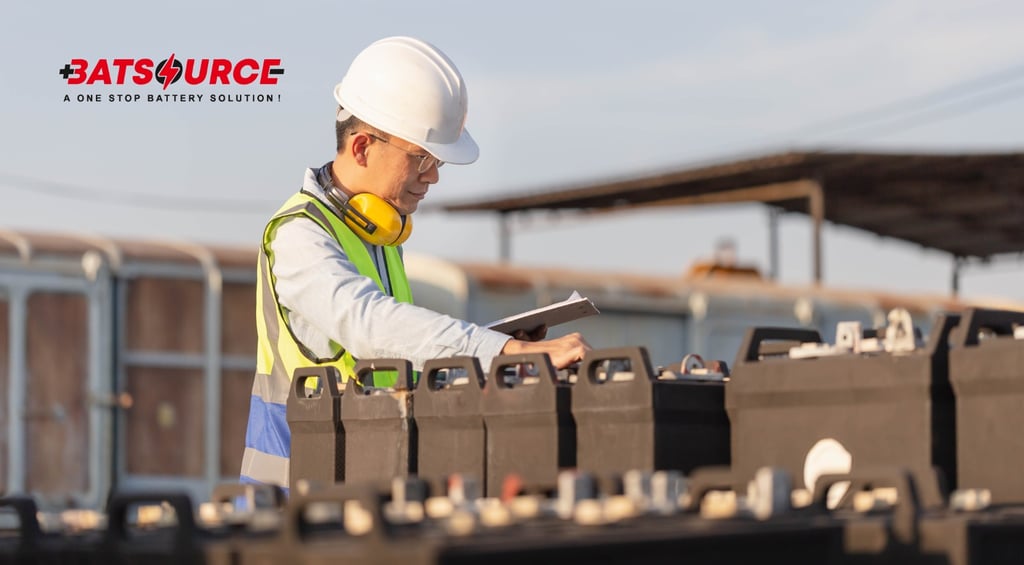
Industrial batteries aren’t just about storing energy. They’re the hidden backbone of warehouses, factories, and fleets, keeping everything moving without interruption. Whether you’re running forklifts around the clock, operating backup systems for sensitive equipment, or managing large-scale facilities, choosing the right battery can make the difference between smooth operations and costly downtime.
The challenge is simple: not all batteries are built the same. Some deliver the brute force needed for heavy-duty machines, while others focus on long-lasting cycles and energy efficiency. To find the right fit, you need more than just technical specs, you need clarity on your actual power demands and the working environment.
Let’s break it down step by step.
Why Industrial Batteries Matter
Imagine a warehouse with forklifts slowing down mid-shift, or a production line halting because of power gaps. Industrial batteries are designed to prevent that. Unlike standard batteries, they’re built for high-capacity energy storage, frequent charging cycles, and the resilience to operate in demanding conditions.
Their role extends far beyond forklifts. Industrial batteries are used in:
Material handling equipment (pallet jacks, aerial lifts, AGVs)
Backup and standby power for IT systems and critical facilities
Renewable energy storage for solar or hybrid systems
Large fleets that require consistent uptime and predictable performance
In short, the right industrial battery is a performance partner, not just a piece of equipment.
Types of Industrial Batteries
To pick the right battery, you first need to know what’s out there. The most common categories include:
1. Lead-Acid Batteries
The classic workhorse. Lead-acid batteries are cost-effective, proven, and capable of handling tough industrial jobs. They’re widely used in forklifts and backup systems. The trade-off is weight, regular maintenance, and slower charging compared to modern alternatives.
Best for: High-power applications where upfront cost is a concern and maintenance teams are in place.
2. Lithium-Ion Batteries
These have become the go-to option in recent years. Lithium-ion batteries charge faster, last longer, and require little to no maintenance. They’re lighter, more energy-efficient, and often deliver more cycles than lead-acid options.
Best for: High-traffic operations with multiple shifts, where downtime and maintenance need to be minimized.
3. Nickel-Cadmium (Ni-Cd) Batteries
Known for durability and stable performance in extreme conditions, Ni-Cd batteries hold their charge well and can tolerate temperature swings. They’re not as common now due to environmental concerns and higher costs, but they’re still used in specialized applications.
Best for: Harsh environments with temperature fluctuations.
4. Flow Batteries
A newer technology in the industrial landscape. These are often used for large-scale energy storage systems. Flow batteries allow quick recharge through electrolyte replacement, but their use is still niche and application-specific.
Best for: Renewable energy storage and long-duration power backup.
Factors to Consider When Choosing a Battery
Selecting the right industrial battery isn’t just about picking a type, it’s about matching your operational needs. Here are the key factors to weigh:
1. Power Requirements
Start with the basics: how much power do your machines or systems need, and for how long? For fleets, consider the average runtime per shift. For facilities, calculate backup needs in kilowatt-hours.
2. Charging Infrastructure
Do you have the setup for fast charging, or will your team rely on swapping batteries between shifts? Lithium-ion supports opportunity charging (short top-ups during breaks), while lead-acid typically needs full cycles.
3. Maintenance Capabilities
Lead-acid batteries require water top-ups and regular inspections. If you don’t have a dedicated maintenance team, lithium-ion might be worth the higher upfront cost.
4. Total Cost of Ownership
Don’t just look at the purchase price. Factor in lifespan, charging efficiency, maintenance, and downtime costs. A cheaper battery may end up more expensive over five years than a higher-quality option.
5. Environmental Conditions
Extreme heat, cold, or humidity can affect battery life and performance. Match the battery chemistry to the environment.
6. Sustainability Goals
If your business has green initiatives, lithium-ion and renewable storage options align better with reducing emissions and waste.
Signs You’re Using the Wrong Battery
Sometimes the easiest way to know you need a new battery solution is by spotting the red flags. Watch out for:
Frequent downtime due to charging or swapping
Batteries not lasting a full shift
Rising maintenance costs
Safety concerns (leaks, overheating, corrosion)
Inconsistent equipment performance
If any of these sound familiar, it’s worth reviewing your current battery setup.
Future Trends in Industrial Batteries
The industrial battery space is evolving fast. Here are a few trends worth noting:
Faster charging technologies are cutting downtime even further.
Smart battery management systems (BMS) help monitor performance in real time.
Hybrid solutions are emerging, blending renewable energy with industrial storage.
Recycling and second-life batteries are gaining traction as sustainability becomes a priority.
Businesses that stay ahead of these trends not only improve efficiency but also reduce long-term costs.
Practical Tips for Buying Industrial Batteries
Audit your current usage: Track power consumption, downtime, and maintenance records.
Talk to your operators: They’ll know firsthand where the current setup falls short.
Consult with experts: A supplier familiar with industrial demands can match the right battery to your application.
Think long-term: A slightly higher upfront investment often pays off in reliability and reduced downtime.
Plan for growth: Choose a solution that scales with your operations, not just today’s needs.
The Bottom Line
Finding the best industrial battery isn’t about chasing the latest technology, it’s about finding the right fit for your workflow, environment, and long-term goals. A warehouse fleet might thrive on lithium-ion for quick turnaround and zero maintenance, while a backup system might still rely on the tried-and-tested reliability of lead-acid.
What this really means is: the right battery is the one that keeps your operations running at full speed without unnecessary cost or hassle.
And if you’re looking for reliable, high-performance batteries that meet these standards, you don’t have to look far. For premium industrial battery solutions tailored to your needs, contact BATSOURCE.



Complete battery solutions for homes, industries, and commercial applications. Driven by expertise, powered by trust.
Phone:
Email:
Address:
+91 90330 33112
batsource.ahm@gmail.com
Shop No. 9, Kavisha Urbania, Behind Flora Ixora, Flora Ixora Road, South Bopal, Ahmedabad – 380058